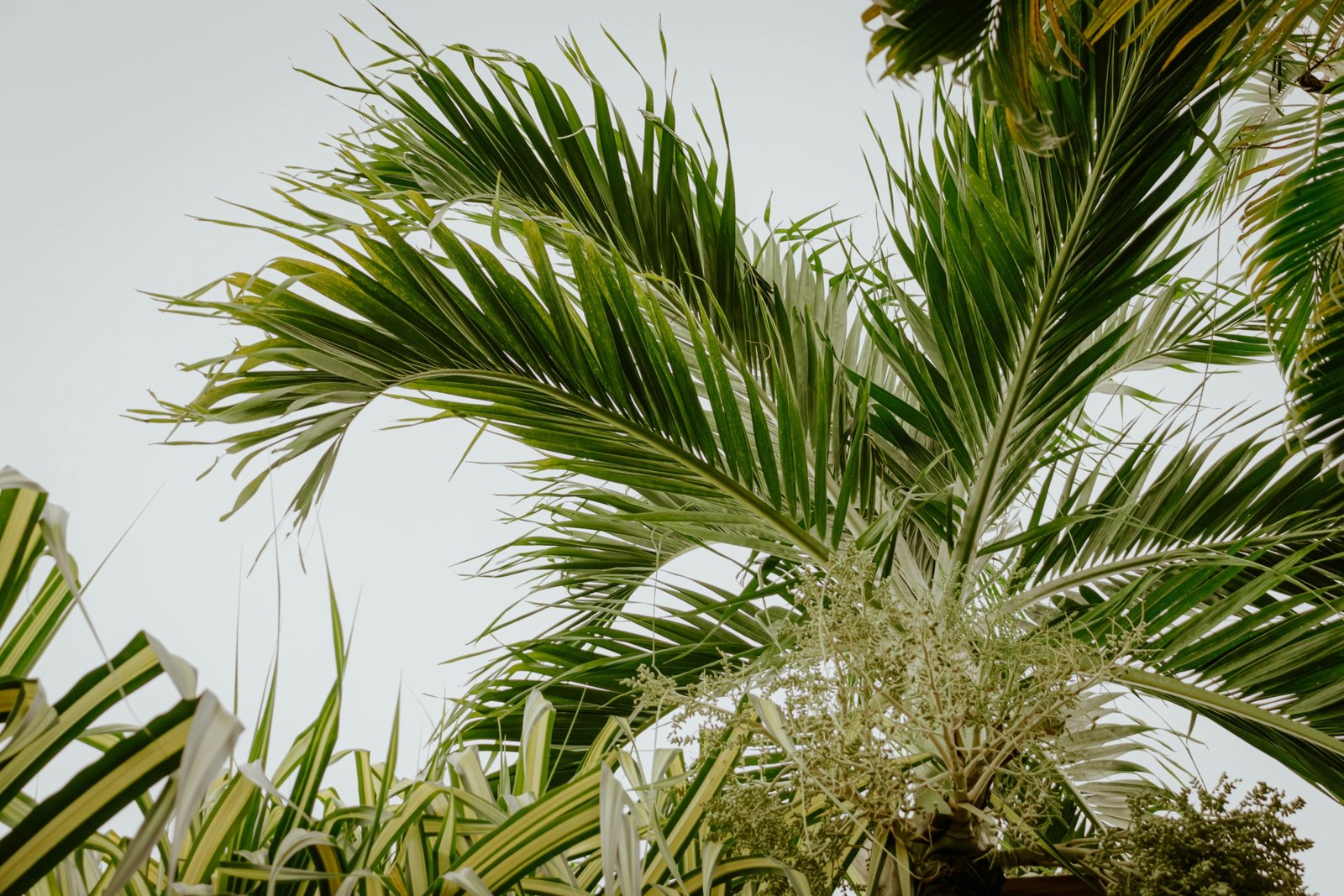
What is a traveller’s palm?
The traveller’s palm, scientifically known as Ravenala madagascariensis, is a tropical plant native to Madagascar. Despite its name, it is not a true palm but belongs to the bird-of-paradise family. The plant is famous for its large, fan-shaped arrangement of leaves, which can grow up to 10 meters tall in the wild.
This plant is widely cultivated for ornamental purposes in tropical and subtropical regions due to its striking appearance. The name “traveller’s palm” comes from the belief that the plant’s leaves store rainwater and could be used by travellers to quench their thirst in emergencies.
Unique Features and Identification
One of the most distinctive features of the traveller’s palm is its fan-shaped leaves arranged on a single plane. This gives the plant a unique architectural look that is easy to spot. The leaves can reach up to 2 meters long and are bright green with a smooth texture.
Moreover, the plant produces white flowers that bloom in clusters, often followed by large seeds with blue, black, and white coloring. These seeds attract birds and help with natural seed dispersal.
To identify the traveller’s palm effectively, look for the following characteristics:
- Fan-shaped arrangement of large leaves
- Single, tall stem (which can look like a palm trunk)
- Clusters of striking white flowers
- Large, colorful seeds often seen hanging or on the ground underneath
Uses and Cultural Significance
The traveller’s palm serves several ecological and cultural purposes. Traditionally, its leaves were used as thatching or for weaving mats and baskets due to their durability. The plant also plays a crucial role in its native ecosystem by providing shelter and food for various animals.
In addition, the traveller’s palm holds cultural value in Madagascar and some other tropical regions, symbolizing hospitality and safety for travellers. Its water-storing ability — although limited — is still noted as a helpful characteristic.
For gardeners and landscapers, the traveller’s palm offers an eye-catching focal point for tropical gardens and public parks. It prefers warm climates, plenty of sunlight, and well-drained soils. Moderate watering and protection from strong winds ensure healthy growth.
Overall, the traveller’s palm is much more than a decorative plant; it embodies a blend of natural beauty, practical use, and cultural richness.