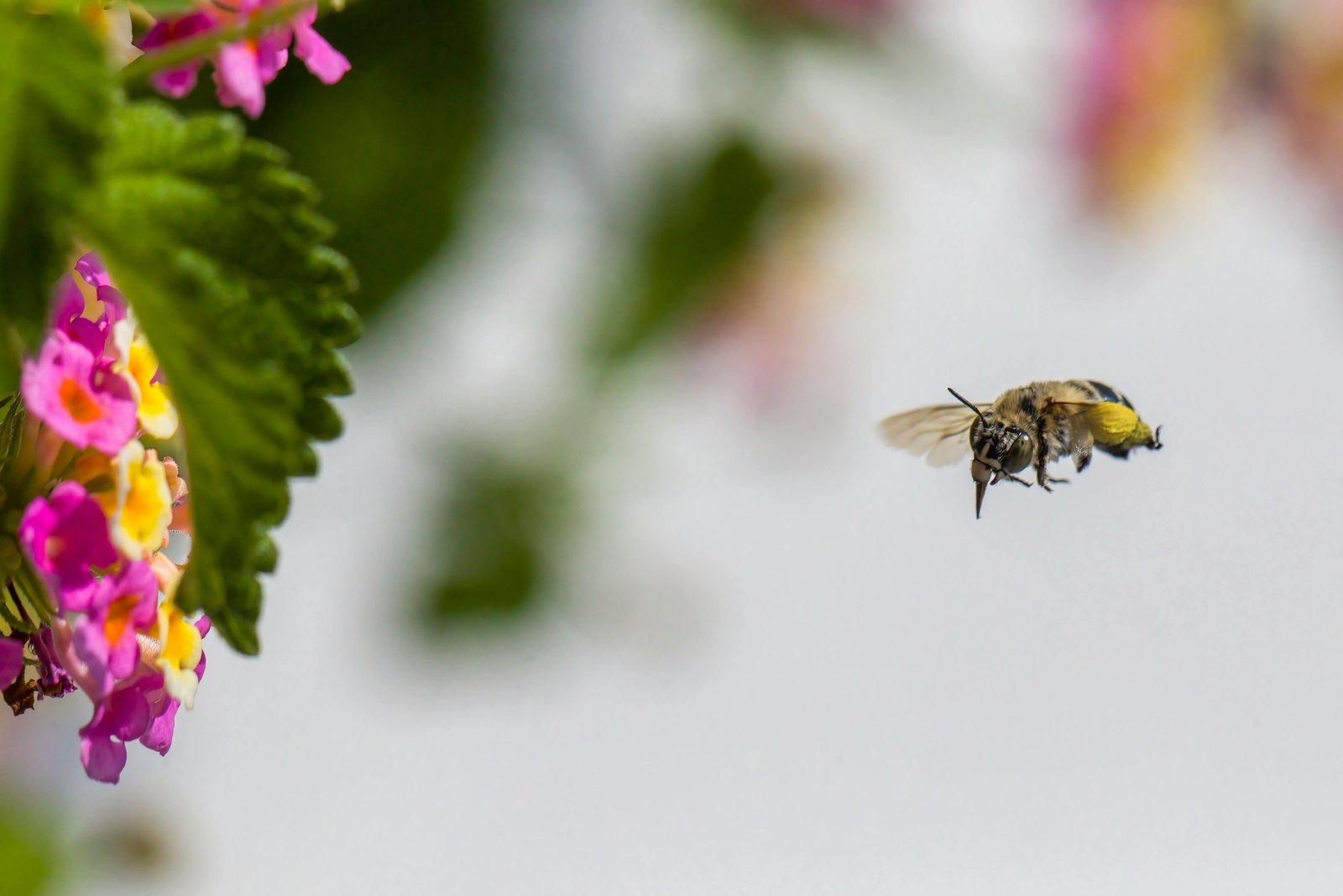
how far do honey bees travel? This question often comes up among nature lovers and gardeners alike. Honey bees are incredible pollinators, and their ability to cover large distances plays a key role in pollination and ecosystem health. Typically, these bees can travel up to 3 to 5 miles (5 to 8 kilometers) from their hive while searching for food.
Understanding Honey Bee Flight Range
Honey bees mainly fly to collect nectar and pollen for the hive. Their travel range depends on many factors, but on average, they fly between 2 and 5 miles. Research has shown that some honey bees can even travel up to 6 miles (around 10 kilometers) in optimal conditions.
The flight range allows bees to explore a vast area for food, which helps maintain the colony’s health. Usually, bees stick to areas with abundant flowers, as flying requires energy. Shorter flights save energy, so bees prefer nearby flowers but will travel further if needed.
Factors That Influence How Far Honey Bees Travel
Several factors impact the distance honey bees travel:
- Availability of Food Sources: If flowers near the hive are scarce, bees will travel farther to find nectar.
- Weather Conditions: Wind, temperature, and rain affect flight. Bees avoid flying in bad weather, reducing their travel distance.
- Hive Needs: When the colony needs more food, bees may extend their range to meet these demands.
- Landscape and Obstacles: Urban or forested areas might limit flight distance, while open fields make longer flights easier.
Why Knowing Their Travel Distance Matters
Understanding how far honey bees travel helps in many ways. For farmers, it guides where to place hives to maximize pollination. Gardeners learn how to attract bees and support their activity. Moreover, conservationists benefit by protecting the habitats bees rely on during their journeys.
Clearly, honey bees’ travel distance plays a vital role in global food production and biodiversity. By supporting bee-friendly practices, we encourage healthy hives that effectively pollinate crops and wild plants.